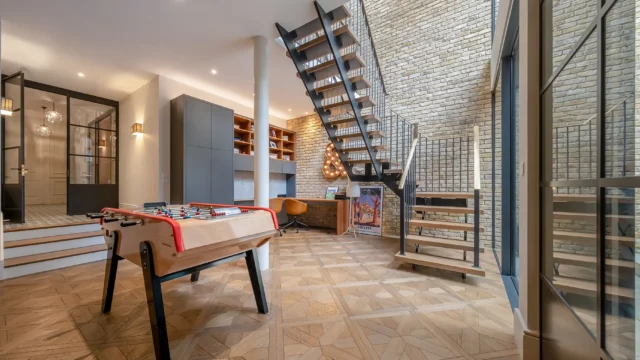
Lots of London homes have a basement that ends up being little more than an afterthought. Often dark, with narrow stairs, a bit too damp to store things down there, and rarely used. It’s a space that never quite earns its keep. A basement conversion is about changing that, turning it into a part of the home you actually want to spend time in.
Some conversions can be fairly light-touch, focusing on making the space dry, warm and usable.
Others go further, with structural work to improve ceiling height, open things up, and add as much space to the building as feasible. It really depends on what you’re starting with and what you want to get out of it.
Why consider converting your basement?
If you’re short on space but don’t want to move, a basement can be a smart place to look, especially if a classic house extension or loft conversion isn’t an option for you. It gives you extra room without extending outwards or sacrificing garden space – and we know how precious garden space is in the London area!
We find that it works for all sorts of situations. Families needing a bit more breathing room, people working from home, or households adapting to multi-generational living. Some people want to build what can be fondly called a ‘granny annexe’ before it’s needed, and then put the space on AirBnb.
It can also take pressure off the rest of the house by giving you somewhere dedicated for work, exercise, storage, or simply switching off.
At a glance, a basement conversion can:
- Add usable space within your existing home
- Add long-term property value
- Help manage damp and protect the structure when properly waterproofed
- Be more straightforward than people often expect!
Shell and core basement conversion versus a complete basement conversion
A shell and core basement conversion covers what you could consider to be the prep and the first part of the conversion building work.
When we do a shell and core basement, we provide the structural engineering designs and we help you navigate things like party wall agreements and planning permission, if it’s required by your local authority.
We then excavate the space, construct the relevant concrete and steel structures, and build the waterproofing and drainage systems.
From this point on all projects are flexible as to any additional packages you may need, from insulation and heating to additional masonry details.
A complete basement conversion, sometimes described as ‘turnkey’ as all you need to do is turn the key into the completed space, features all of the above, plus full interior finishing. You could also have us work on the project up to the ‘whitebox’ stage – where everything is built and ready, but you need to finish the interior painting and decorating.
Insulating a basement conversion
Good insulation makes a big difference, as you won’t have any rooms underneath you to heat you by proxy. It helps keep the space warm, reduces energy bills, and creates a more comfortable environment overall. With existing homes, insulation is usually added internally, and the focus is mainly on the walls rather than the ceiling.
There are a few common options, depending on budget and finish, but the key thing is managing moisture. Warm air meeting cold basement walls can lead to condensation, so a proper vapour control layer is essential. This sits on the warm side of the insulation and helps prevent damp and mould issues.
Ventilation
Ventilation is as vital as insulation. Without it, basements can quickly feel stale or humid. Good airflow keeps the space fresh and helps control moisture levels.
This can be achieved in a few ways, including windows, extractor fans, ventilation units, or even just an open staircase design that allows air to circulate more freely.
Heating in your basement conversion
To make the space feel properly liveable, heating needs to be considered early on. What works best will depend on your layout and budget.
Underfloor heating is a popular choice, especially in basements, as it spreads heat evenly and works well with waterproofing systems. Radiators are another straightforward option, while portable heaters can work as a short-term solution but tend to be less efficient in the long term.
Lighting the basement space
Lighting plays a huge role in how a basement feels. The majority of projects don’t get much natural light, so it’s about making the most of what you have and layering artificial lighting carefully.
Spotlights, track lighting, and wall lights tend to work well without taking up headroom. If ceilings are low, recessed lighting can help keep things feeling open. Adding softer lighting, like lamps or uplighting, can make the space feel more relaxed and less clinical. Let’s not get into a debate about warm or cool lighting though!
If you do have windows, it’s worth keeping them as clear as possible to maximise natural light. If not, options like lightwells, glass doors, or even light tubes can help bring brightness in from above.
How long does a basement conversion take?
It’s an infuriating answer, but in all honesty timelines vary depending on the level of work involved. A simpler conversion can take a few weeks, particularly if it’s focused on waterproofing and making the space usable.
More complex projects, especially those involving additional excavation or complex structural changes, can take several months. Our most complicated build so far took 10 months.
Planning ahead and having a clear scope helps keep things running smoothly – which is why all projects have their own project manager when you choose to build your basement conversion with us.
What does a basement conversion cost?
Again, costs can vary quite a bit depending on the type of project you’ve opted for. If you’ve gone for more of a turnkey approach, it’ll cost more but you’ll have less companies to manage and a completed project by the end.
Typical main areas of costs fall under;
Waterproofing
Flooring
Heating and plumbing
Lighting and electrics
Finishing and decoration
Additional work like lowering the floor, creating new access, adding lightwells, or dealing with drainage can also increase costs. Planning and building regulation fees may also apply, depending on where you live.
Generally speaking though, the smaller the basement conversion, the less it costs.
Coal Cellar Conversion: from £50,000 + VAT
Coal cellar conversions create small, non-habitable spaces, typically used for storage or wine cellars. They generally do not require light wells.
Half Basement Conversion; Estimated cost: from £150,000 + VAT
A half basement extends only beneath the original structure of the house. It is well suited to kitchens, living areas, gyms, bathrooms, or additional bedrooms and can still add substantial value.
Garden Basement: Estimated cost: £150,000–£200,000 + VAT
Constructed beneath the garden rather than the main house, a garden basement causes less internal disruption and allows homeowners to remain in the property during construction. These spaces benefit from increased natural light through glazing and are often connected via an external staircase.
Full Basement Conversion: Estimated cost: £400,000–£600,000 + VAT
A full basement conversion extends beneath the entire footprint of the property, including existing extensions. This option provides the maximum additional space and is ideal for larger facilities such as swimming pools or leisure areas. Natural light is typically introduced via front and rear light wells.
While it’s a significant investment in not just money but also time, many homeowners find the added space and flexibility make it worthwhile, particularly in areas where space is at a premium.
Bringing it all together with SimplyEasy Refurbs
A basement conversion is about making better use of the space you already have. With the right approach to insulation, ventilation, lighting, and layout, it can become one of the most versatile parts of your home.
If you’re considering a project, taking the time to plan properly and work with experienced professionals will make all the difference to how the space feels once it’s finished. There are a LOT of moving parts to a project like this – and we’re with you every step of the way. Speak to one of our experienced team today to find out what option is best for you.If you’re ready to start designing your dream space, get in touch with our team today, rated 5 stars on TrustPilot